| Home | Previous Lesson: Traditional Model Next Lesson: OLE Features |
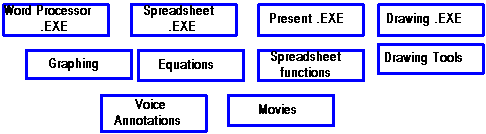
The Component Object Model takes some of the core functionality out of the executables and make them stand-alone objects that can be called from any application that supports OLE.
Above figure shows, the added functionality that was discussed in the Traditional Model is now broken out into separate objects. The advantages are numerous. First, if you need to add charts into a container document, the same charting engine will be used and the same User Interface is applied, thus reducing the learning curve significantly. Secondly, each baseline executable will be smaller and the separate objects will not be duplicated on the hard disk, just simply installed in a common place so they can be commonly called from each baseline application. Lastly, this promotes the notion of "best of breed" objects, meaning that if you don't like the drawing tools, simply install a better set of drawing tools and the newly installed drawing tools will be available in each application.
| Home | Previous Lesson: Traditional Model Next Lesson: OLE Features |