| Home | Previous Lesson: OLE - Part I Next Lesson: What is Linking and Embedding? |
The theory behind OLE is based upon one application using the functionality provided by another. Objects are linked to or embedded in your application and when activated, the application that originally created the alien object is used to handle any interactions that the user wishes to perform.
The application that has the object embedded or linked into it is called the OLE Client or OLE Container Object, while the application that created the embedded object is called OLE Server. OLE Client application provides space to place the object to display, while OLE Server application provides the functionality, i.e., methods to manipulate the data created by it.
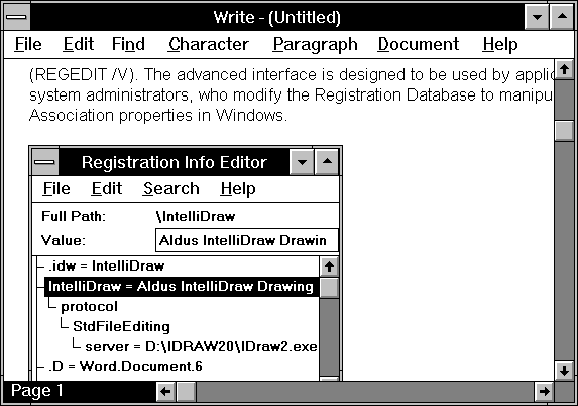
For example, let us take a write document that has a PaintBrush picture placed in it. In this example, Write is OLE Client which provides space to place the OLE Object and displays it on the screen and PaintBrush is the OLE Server which actually created the bitmap and knows how to manipulate the bitmap file.
 |
An application can be either an OLE Container or an OLE Server, or indeed both. |
| Home | Previous Lesson: OLE - Part I Next Lesson: What is Linking and Embedding? |